

For years, the global electric vehicle industry has depended heavily on lithium-ion batteries. But China is now pushing another technology into the spotlight sodium-ion batteries, sometimes loosely called “salt batteries”.
The technology could eventually make some electric vehicles cheaper, reduce dependence on lithium and provide a new option for storing solar and other renewable energy.
But there is a catch: sodium-ion batteries are still behind the best lithium-ion batteries in energy density.
So, is China about to replace lithium with salt?
Not exactly.
The bigger story is that the world may be heading towards a battery industry where different technologies are used for different purposes.
What is a sodium-ion battery?
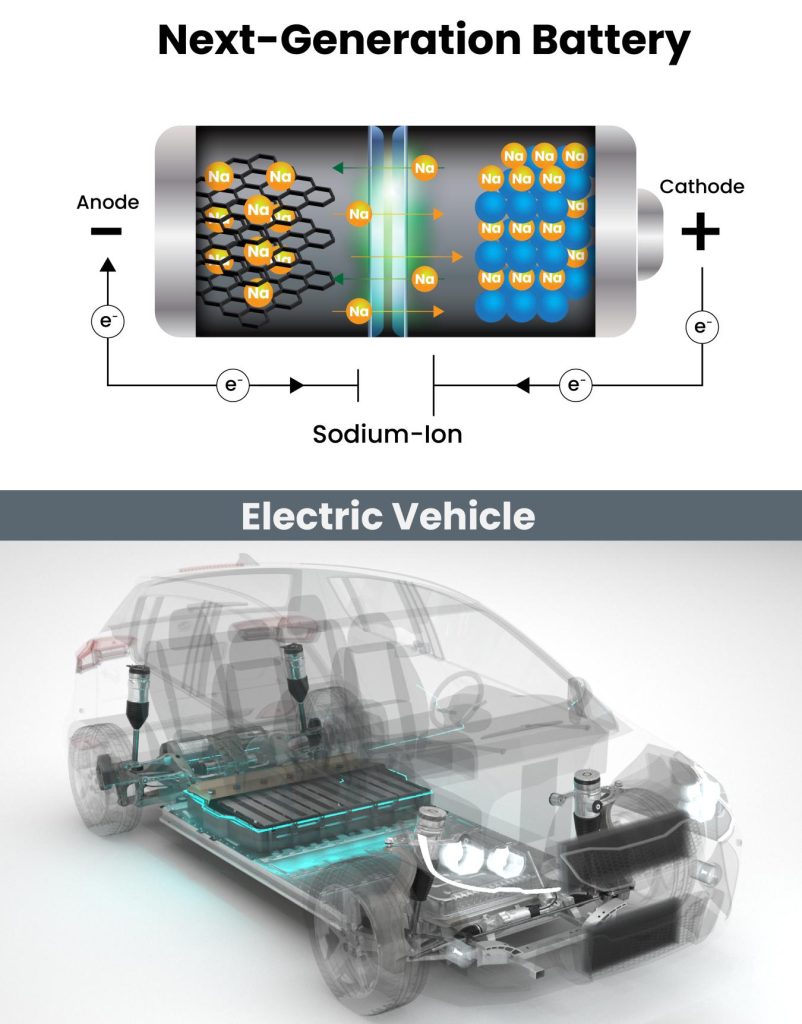
A sodium-ion battery works in a similar way to a lithium-ion battery. The major difference is that it uses sodium ions instead of lithium ions to store and release electrical energy.
Sodium is extremely abundant and can be found in seawater and compounds such as ordinary salt.
That abundance is attractive at a time when demand for lithium is rising rapidly because of electric vehicles and renewable-energy storage.
China is already moving aggressively into this technology.
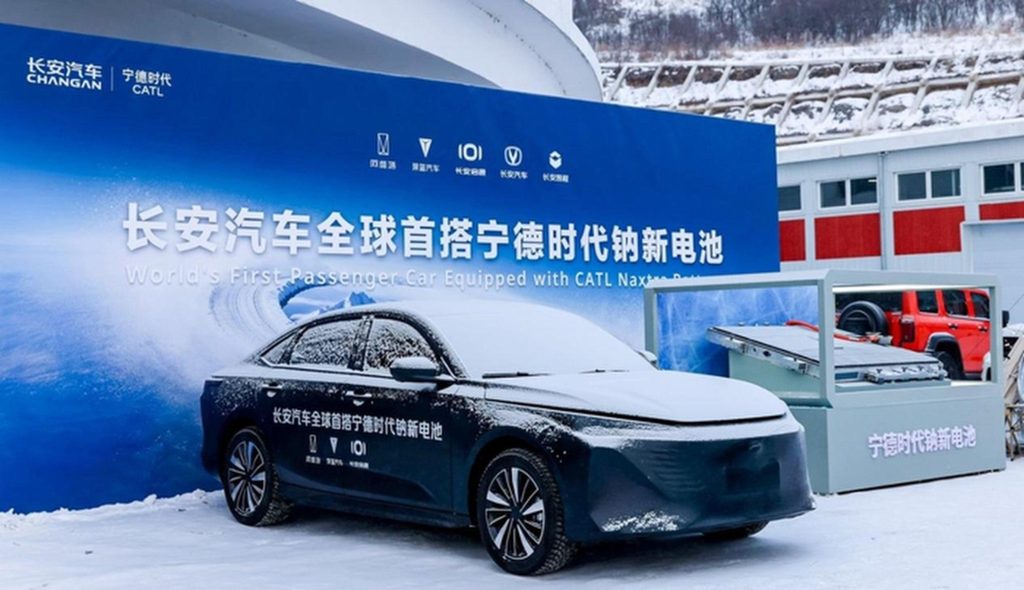
In February 2026, Chinese battery manufacturer CATL and automaker Changan unveiled what they described as the world’s first mass-production passenger vehicle equipped with a sodium-ion battery. CATL says the battery can deliver more than 400 kilometres of driving range in the vehicle.
The development is important because the technology is moving beyond laboratories and demonstrations and towards actual commercial use.
Could sodium batteries make electric cars cheaper?
Potentially.
One of sodium-ion’s biggest attractions is that manufacturers can reduce their dependence on lithium.
Lithium prices have experienced major fluctuations in recent years, creating uncertainty for battery manufacturers.
The International Energy Agency says sodium-ion batteries could help reduce exposure to lithium price shocks by giving manufacturers an alternative battery chemistry.
If production expands and manufacturers achieve economies of scale, the technology could eventually help lower the cost of some electric vehicles.
That could be particularly useful for small city cars, taxis, buses, delivery vehicles and two- and three-wheelers.
For consumers in markets such as Ghana, where the upfront cost of electric vehicles remains a major consideration, cheaper batteries could make electric mobility more accessible.
But cheaper batteries are not guaranteed yet.
Sodium-ion production remains much smaller than lithium-ion production, and lithium batteries benefit from decades of investment and highly developed manufacturing systems.
The biggest weakness: driving range
This is where lithium still has a clear advantage.
The amount of energy a battery can store relative to its weight is known as energy density.
The higher the energy density, the more energy an electric vehicle can carry without requiring an extremely large and heavy battery pack.
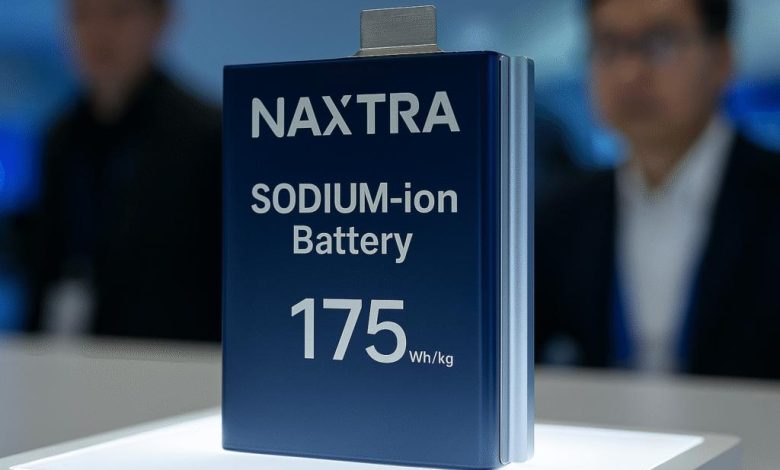
The IEA says leading sodium-ion cells currently reach around 175 Wh/kg, compared with up to about 205 Wh/kg for LFP lithium-ion batteries and around 265 Wh/kg for some NMC lithium-ion batteries.
That means sodium-ion batteries are currently better suited to applications where maximum driving range is not the main priority.
A small car used mainly around Accra may not need the same battery capacity as a premium SUV designed for long-distance travel.
This is why sodium-ion is unlikely to replace lithium-ion across the entire EV industry simply.
Instead, the two technologies could exist side by side.
Sodium has another advantage in cold weather
Sodium-ion batteries could also outperform some lithium-ion batteries in extremely cold conditions.
The IEA says newer sodium-ion batteries can retain around 90% of their nominal capacity at temperatures as low as -40°C.
That could make them particularly attractive in countries with severe winters.
For Ghana and other tropical African countries, however, this advantage is less important.
Here, consumers are more likely to focus on price, battery lifespan, charging time, reliability and access to charging stations.
The bigger opportunity may not be cars
Electric vehicles are only part of the story.
One of the most promising uses for sodium-ion batteries could be large-scale energy storage.
Solar panels produce electricity during the day, but homes and businesses still need power at night. Batteries can store some of that daytime electricity and release it when required.
Stationary storage does not need to be lightweight in the same way an electric car battery does.
That makes energy density less of a problem.
The IEA expects sodium-ion batteries to be particularly suitable for stationary storage, smaller EVs, light commercial vehicles and two- and three-wheelers.
For Ghana, this could eventually be significant.
Cheaper battery storage could help solar power become more useful by allowing excess electricity generated during the day to be stored for later use.
It could potentially benefit homes, businesses, telecommunications facilities and larger renewable-energy projects.
But technology alone will not solve Ghana’s energy challenges. Investment in infrastructure, reliable electricity, financing and technical expertise would still be required.
There are disadvantages too
The excitement surrounding sodium batteries should not hide their limitations.
The first is energy density, as already mentioned.
A sodium-ion battery may need to be larger or heavier than a lithium battery delivering the same amount of energy.
There is also the issue of materials.
Sodium itself is abundant, but sodium-ion batteries still require other materials depending on the chemistry used. The IEA notes that some sodium-ion technologies can still depend on minerals such as manganese and nickel.
So sodium does not completely eliminate concerns about critical minerals.
There is another potential problem for countries trying to diversify their supply chains.
Could the world become more dependent on China?
China already dominates much of the global battery manufacturing industry.
That position is also extending into sodium-ion technology.
The IEA expects China to account for a very large share of global sodium-ion production capacity by 2030.
That means countries could reduce their dependence on lithium while becoming more dependent on Chinese battery manufacturing.
For governments concerned about energy security and strategic industries, that is something to watch closely.
What does it mean for Ghana and Africa?
Africa could be affected in two ways.
The first is as a consumer.
If sodium-ion batteries eventually make EVs and energy-storage systems cheaper, African consumers and businesses could gain access to more affordable technology.
The second opportunity is much bigger: production.
Africa has significant mineral resources and enormous potential for renewable energy.
Instead of exporting raw materials and importing finished batteries and vehicles, African countries could eventually seek a larger role in processing, battery assembly, recycling and electric-vehicle manufacturing.
For Ghana, that would require long-term investment, technical training, industrial infrastructure and supportive government policies.
Simply having minerals or buying cheaper batteries will not be enough to create a major local battery industry.
Will sodium batteries kill lithium-ion?
Probably not.
At least, not in the foreseeable future.
Lithium-ion batteries still have major advantages in energy density, manufacturing scale and established supply chains.
Sodium-ion batteries, meanwhile, could find their strongest markets in affordable EVs, urban transport, energy storage and other applications where low cost and material availability are more important than maximum range.
That could ultimately be good news for consumers.
More battery technologies mean more competition.
More competition could mean better products, greater supply security and potentially lower prices.
For Ghana and the rest of Africa, the important question is not whether sodium will defeat lithium.
It is whether the continent will simply buy the next generation of battery technology from China and other manufacturers or find a way to become part of the industry itself.
China’s sodium-ion push therefore represents more than a new type of battery.
It is another step in a much bigger race over who will control the future of electric transport, renewable energy storage and the technologies that power the modern world.

