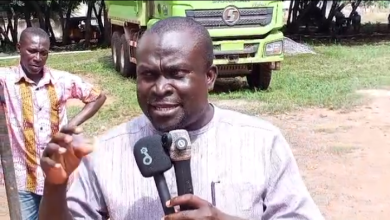
The Dormaa Central Municipal Assembly’s HIV/AIDS Unit has held a public sensitisation programme at Danyame to raise awareness about HIV prevention and the importance of safe practices.
Speaking at the event, Dormaa Central Municipal Chief Executive, Hon. Dominic Adoma Ameyaw, emphasised that HIV remains a real and ongoing public health threat that demands serious attention.
Hon. Adoma Ameyaw specifically warned residents against the dangers of sharing sharp objects such as razors and nail cutters. He noted that some nail-cutting service providers, including certain foreign nationals operating in communities, frequently reuse the same instruments on multiple clients.
He explained that the disinfectant solutions commonly used by these operators often only remove visible dirt and may not fully eliminate harmful germs and viruses.
The MCE therefore advised residents to purchase and carry their own personal nail cutters, razors, and other grooming tools whenever they visit salons or barbering shops. This simple habit, he said, can significantly reduce the risk of contracting HIV and other infections.
Representing the Municipal Health Director, the Municipal HIV/AIDS Focal Person, Mr. Gideon Osei, echoed the concerns and highlighted issues with sterilisation practices in grooming centres.
He cautioned that not all sterilising machines used in barbering salons and beauty parlours can be fully trusted. Only equipment properly certified by relevant regulatory authorities should be relied upon for effective sterilisation.
Mr. Osei encouraged the public to buy and use their own hair clippers and personal grooming tools whenever possible. He stressed that even when blood stains are not visible, microscopic traces of infected blood can remain on instruments and transmit HIV.
“Human blood contains red and white blood cells,” he explained. “While visible stains may disappear, infectious components can still linger undetected on contaminated tools.”
Mr. Osei also shared sobering local statistics: 1,078 people in the Dormaa Municipality are currently living with HIV and receiving treatment. In the Danyame area alone, 65 individuals are on treatment and care.
The sensitisation programme forms part of the Assembly’s broader efforts to boost HIV awareness, reduce stigma, and promote responsible preventive behaviours among residents.