The Vanishing Cedi: How the Silent Death of Ghana’s 20-Pesewa Coin is Fueling a Cost-of-Living Crisis

In the bustling markets of Makola and the crowded “trotros” of Accra, a silent economic war is being waged. It is not fought with policies or protests, but with the clinking of small copper-colored discs that are increasingly being rejected by the very hands they were meant to serve.
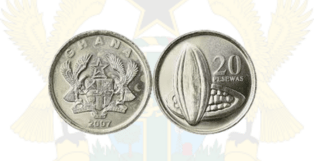
The 20-pesewa coin, once a staple of the Ghanaian marketplace, is facing a sudden death. However, experts warn that its disappearance is not merely a matter of convenience, but a dangerous precedent to a hidden form of inflation that is taking millions of Cedis out of the pockets of Ghana’s most vulnerable citizens.
Revisiting The Redenomination Past
To understand the (20 pesewas) issues of 2026, one must look back nearly two decades. In July 2007, when the Bank of Ghana (BoG), under the leadership of then-Governor Dr. Paul Acquah, executed the redenomination of the Cedi, slashing four zeros off the currency and bringing with it a new family of coins: the 1p, 5p, 10p, 20p, and 50p.
The goal was simple: precision. The BoG intended for these coins to facilitate “exact pricing,” ensuring that inflation could be managed at the most granular level. For a few years, the system worked.
However, by 2010, the first cracks appeared. The 1-pesewa and 5-pesewa coins began to “vanish.” Not because the government withdrew them, but because the public, specifically transport conductors known as “trotro mates” and street vendors, decided they were “not worth the weight.” By 2014, these denominations were off the market, and the first era of “Forced Rounding” was born.
How Forced Rounding Steals Your Wealth
Before the rejection of the 1p and 5p coins, a consumer could pay the exact price for a basic good. Once they disappeared, prices didn’t fall; they shifted upward.
Consider the “Sachet Water Case.” In the early 2010s, if the cost of pure water should have been 12 or 13 pesewas based on production costs, it was immediately rounded to 15 or 20 pesewas. Why? Because the seller “did not have the change.”
This shift represented an instant 25% to 50% price hike on a daily necessity. This wasn’t driven by the global price of oil or the strength of the US Dollar but it was driven by a missing coin.
2026: History Repeats Itself
Today, in January 2026, the 20-pesewa coin is meeting the same fate. What was once the floor for small transactions is being replaced by the 50-pesewa and 1-Cedi mark.
| Year | Monetary Event | Economic Impact |
| 2007 | 1p and 5p Coins Introduced | Precise pricing established to control inflation. |
| 2010-2014 | Rejection of 1p and 5p | Birth of forced rounding; base prices jump to 10p/20p. |
| 2024-2025 | 10p and 20p start vanishing | Prices begin rounding to the nearest 50p or GH₵1. |
| 2026 (Today) | 20p Widely Rejected | “Hidden Inflation” takes hold as small change disappears. |
The “Hidden Inflation” Trap
When the 20-pesewa coin dies, the minimum unit of change in the Ghanaian economy effectively becomes 50 pesewas. For the average worker, this is a mathematical nightmare.
Imagine transport fare costs GH₵4.60. In the current climate, a bus conductor (totro mate) is likely to demand GH₵5.00, claiming a lack of change. That 40-pesewa loss may seem negligible in a single transaction, but for 30 million Ghanaians engaged in millions of daily micro-transactions, the aggregate loss is staggering. It represents a massive, unrecorded transfer of wealth from consumers to traders and transport owners.
A Criminal Offense: The BoG Strikes Back
The Bank of Ghana remains firm. Dominic Owusu, Head of Currency Management at the BoG, has spent much of the last year crisscrossing the country to remind citizens that these coins are not “worthless.”
“Coins do not expire,” Owusu stated in a late 2025 briefing. “A coin minted in 2007 remains 100% legal tender today.”
More importantly, the BoG is reminding the public that refusing legal tender is not just a choice; it is a crime. Under the Currency Act, any individual or business found to be rejecting the 20-pesewa coin could face up to three years in prison.
As Ghana navigates the economic complexities of 2026, the humble 20-pesewa coin remains a vital shield against artificial inflation. Its survival in the pockets of Ghanaians may well determine the stability of the nation’s cost of living in the months to come.