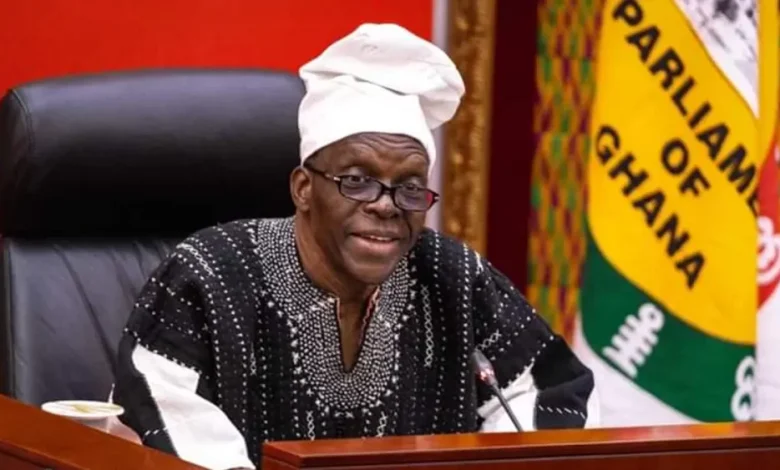
The Speaker of Parliament, Hon. Alban Sumana Kingsford Bagbin, has made some profound comments about the Human Sexual Rights and Family Values Bill, also known as the Anti-LGBTQ Bill, and the future of Ghana. This comes as parliament prepares to take another look at the controversial bill.
Honorable Alban Bagbin explained that the bill could not move forward automatically because it expired when the 8th Parliament ended. According to him, parliamentary rules are clear that once Parliament is dissolved, all unfinished business, including bills, comes to an end.
For that reason, he said, the sponsors of the bill must formally reintroduce it in the current Parliament before any debate or decision can take place on that effect.
The Speaker affirmed that his position is based on parliamentary procedure and not politics. He revealed that he has already instructed the Parliamentary Business Committee to make room for the bill once it is properly presented to the House again.
He further stated that following due process is important to ensure that any law that is passed by Parliament is strong enough to stand up to legal scrutiny.
“We must do things the right way,” he indicated, noting that rushing the process could create problems later. Although Honorable Alban Bagbin has, in the past, clearly stated his personal opposition to LGBTQ activities, he was careful to separate his personal beliefs from his official role as the Speaker of the 9th parliament.
His responsibility is not to decide the outcome of debates but to ensure fairness, order, and respect for the Constitution.
This, he said, is why lawmakers must be allowed to fully debate the bill freely once it is properly introduced in parliament.
The Anti-LGBTQ Bill remains one of the most talked-about issues in the country. Religious groups, traditional leaders, civil society organisations, and international partners have all expressed strong opinions on the matter.
The speaker of parliament acknowledges the public interest but cautioned that Parliament must not allow pressure to override the law.
“Ghanaians expect Parliament to act responsibly,” he noted, adding that careful lawmaking protects both the institution and the country. Once the bill is reintroduced, it will go through the usual parliamentary stages, including committee review, debate, possible amendments, and a final vote.
For now, the Speaker’s message is clear that the bill is not dead, but it must follow the law. As Parliament prepares for the next steps, Ghanaians will be watching closely to see how lawmakers handle an issue that touches deeply on culture, rights, and national identity.