The “Crude” Reality: Inside the U.S. Blueprint to Control Venezuela’s Energy Heartbeat

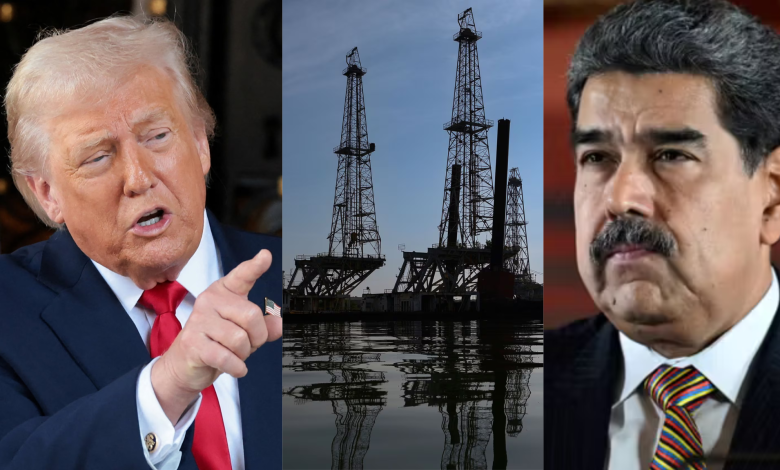
The lightning-fast capture of Nicolás Maduro in the early hours of January 3, 2026, has left the world’s most oil-rich nation in a state of suspended animation. But beneath the tactical brilliance of “Operation Absolute Resolve” and the dramatic headlines of narco-terrorism indictments in New York lies a far more calculated and enduring objective: the total realignment of the Western Hemisphere’s energy security.
As U.S. forces maintain a “stabilizing presence” in Caracas, the Biden-Trump transition and the newly seated administration have made one thing clear: Washington is no longer just a spectator in the Orinoco Belt. The United States is moving to “run” the Venezuelan oil industry, a move that could potentially flood American refineries with the heavy crude they were originally built to crave, fundamentally resetting global oil prices for a generation.
The Refining Diet: Why Venezuela is America’s “Perfect Match”
To understand the magnitude of this capture, one must look not at the streets of Caracas, but at the sprawling industrial skylines of the U.S. Gulf Coast. From Houston to New Orleans, American refineries are masterpieces of complex engineering, but they possess a specific “dietary” requirement. Unlike the light, sweet crude produced by the U.S. shale boom in Texas and North Dakota, these multi-billion-dollar facilities were designed decades ago to process “heavy, sour” crude. This exact, sludgy, sulfur-rich variety sits in abundance beneath the Venezuelan soil.
For years, U.S. refiners have been forced to source this heavy grade from more distant or politically difficult partners like Iraq or via expensive pipelines from Canada. By taking direct oversight of the state-owned Petróleos de Venezuela (PDVSA), the U.S. effectively secures a “near-shore” supply chain. This proximity slashes transportation costs and, more importantly, allows U.S. refineries to run at peak efficiency. When these plants process the heavy Venezuelan “Merey” or “Boscan” grades they were built for, they produce higher yields of high-value products like diesel and jet fuel, providing a direct anti-inflationary pressure on American pump prices.
The Orinoco Prize: Tapping the 303 Billion Barrel Reservoir
The scale of the “prize” is staggering. With over 303 billion barrels of proven reserves, surpassing even Saudi Arabia, Venezuela holds nearly 20 percent of the world’s known oil. However, under years of mismanagement and crumbling infrastructure, production had withered from a mid-1990s peak of 3.5 million barrels per day to a precarious 800,000 barrels.
Sources within the administration suggest a “Marshall Plan” for the Orinoco Belt is already in the works. The strategy involves deploying American “super-majors” like Chevron and ExxonMobil to execute a massive technological “resuscitation” of Venezuelan oil fields. By injecting American capital and drilling technology back into the “heavy oil” belt, the U.S. aims to restore production to 3 million barrels per day within 36 months. This isn’t just about profit; it’s about a “High-Volume, Low-Cost” strategy designed to break the back of OPEC’s price-setting power.
Breaking the “Shadow Fleet” and the China Connection
The capture of Maduro also serves a secondary, lethal blow to the “Shadow Fleet,” a clandestine network of tankers that Maduro used to bypass U.S. sanctions and ship oil to Beijing and Tehran. For years, China has been the primary beneficiary of discounted Venezuelan crude, using it to fuel its own industrial machine while providing Maduro with a financial lifeline.
By “running the country,” the U.S. effectively evicts Chinese and Russian influence from the Western Hemisphere’s energy sector. The crude that once flowed to Asia through illicit channels is now being rerouted back to the Gulf of Mexico. For the U.S., this is a geopolitical “checkmate,” denying adversaries cheap energy while securing a domestic surplus.
The Legal and Ethical Shadow
Despite the economic euphoria on Wall Street, where energy stocks have surged, the move remains a lightning rod for international condemnation. Legal scholars at the United Nations have labeled the “capture and control” model a violation of the most basic tenets of state sovereignty.
“The international law permits the removal of a leader under very specific, narrow circumstances—usually through an ICC warrant or a UN-sanctioned intervention,” says Dr. Elena Rodriguez, a specialist in international maritime law. “A unilateral strike and the subsequent management of a nation’s resources by a foreign power sits in a legally grey area that many would call an act of 21st-century resource colonialism.”
What This Means for the Global Market
As Maduro awaits his first court appearance in a New York federal building, the “crude” reality is that the geopolitical map of energy has been redrawn overnight. If the U.S. successfully stabilizes Venezuelan production, the global oil market could see a sustained period of sub-$60 per barrel prices. For a world struggling with the tail-end of a global inflation crisis, the “Venezuelan Reset” may be the most significant economic event of the decade.
But for the people of Venezuela, the question remains: will the “American Management” lead to a prosperous “New Venezuela,” or will they simply become the latest battleground in the global war for the world’s most precious liquid?